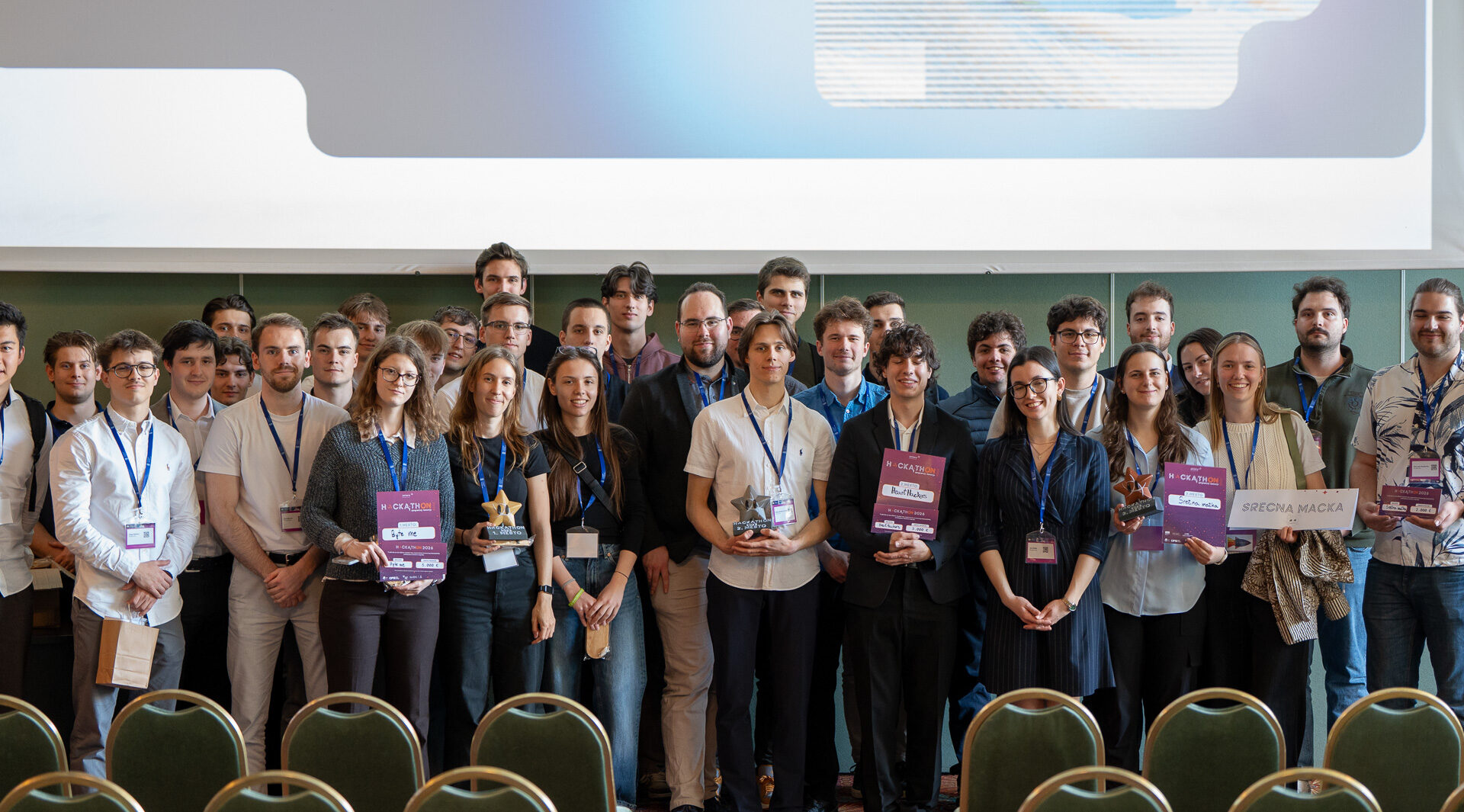
In the second round of the Arnes HackathON, the team Byte Me took first place with their innovative solution addressing the challenge of artificial intelligence in health and biotechnologyc.
This year’s student HackathON was held under the slogan “Program the Magic”, encouraging students to use artificial intelligence to tackle societal challenges across four areas: science, digital society, health and biotechnology, and the green transition. More than 100 participants in 31 teams competed in the first round, with 10 teams (36 participants) advancing to the final round. All teams had access to the Arnes supercomputing cluster while developing their solutions.
In the final stage, the finalists presented their solutions to an expert jury and the audience. The jury selected the top three teams, while the audience voted for their favourite. The event took place as part of the Slovenian Informatics Days conference, with presentations also streamed live on the Arnes Video portal.
The expert jury faced a challenging task, as all teams presented high-quality and socially relevant solutions. The winning team Byte Me consists of Anja Ostrovršnik (Faculty of Electrical Engineering and Computer Science, University of Maribor) and Hana Kovač and Brina Štruc (Biotechnical Faculty, University of Ljubljana). They developed HerDose, an application that enables smarter drug dosing for women by adapting medication doses based on an individual’s hormonal state using computational simulations.
Second place was awarded to the team HeartHackers from the Faculty of Medicine, University of Maribor. Nino Frank, Žan Kešpert, Jure Špenko, Eva Šubic, and Matija Berden Strelec developed Klop pod Klopjo, a solution designed to improve safety in nature by combining environmental, demographic, meteorological, geographical, and epidemiological data on tick populations to inform users when and where the risk of exposure in Slovenia is higher.
Third place went to the team Srečna mačka, consisting of Lan Bitežnik, Katrina Štrumbelj Drusany, Žan Luka Nusdorfer, and Eva Strle (students of the Faculty of Health Sciences and Faculty of Computer and Information Science, University of Ljubljana). Their application FizioMost enables physiotherapists to monitor patients’ execution of prescribed exercises at home, providing insight into long-term progress and improving the quality of treatment.
All three awarded teams submitted their solutions in the field of AI for health and biotechnology.
The audience award went to the team Sinji delfini, which received 141 out of 528 votes.
Participants were supported by mentors and jury members from various fields. The HPC domain was represented by Samo Stanič (University of Nova Gorica), Jani Pogačar (Faculty of Information Studies in Novo Mesto), Florijan Klauser (Jožef Stefan Institute, SLAIF, NCC SLING), and Jurij Dugonik and Domen Veber (Faculty of Electrical Engineering and Computer Science, University of Maribor).
A special feature of this year’s HackathON was its collaboration with the Slovenian AI Factory (SLAIF), with challenges aligned to its four focus areas: AI for science, AI for digital society, AI for health and biotechnology, and AI for the green transition. The diamond sponsor Sandoz | Lek supported the health and biotechnology challenge, while Modra zavarovalnica and Komponentko also contributed to the event.
The event was organised by Arnes, the Slovenian Informatics Society, the Ministry of Digital Transformation, the OPSI portal, the Slovenian AI Factory (SLAIF), the National Competence Centre for HPC (NCC SLING), the Faculty of Computer and Information Science (University of Ljubljana), and the Slovenian Open Science Community, in cooperation with numerous partners. The Arnes HackathON 2026 was held under the honorary patronage of the President of the Republic of Slovenia, Dr Nataša Pirc Musar, and the Slovenian National Commission for UNESCO.
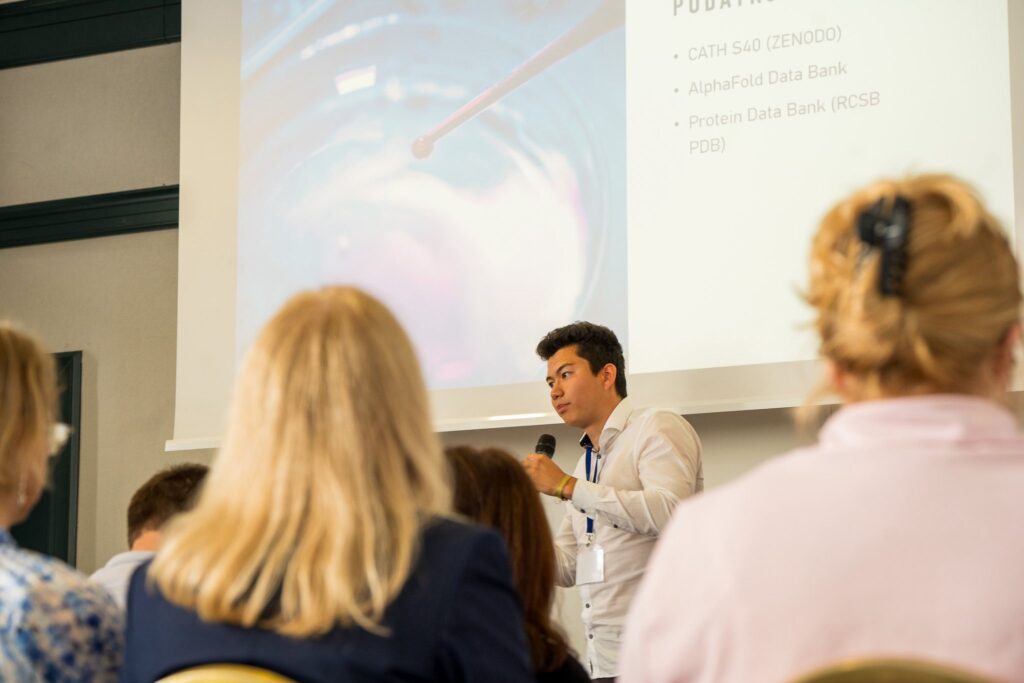
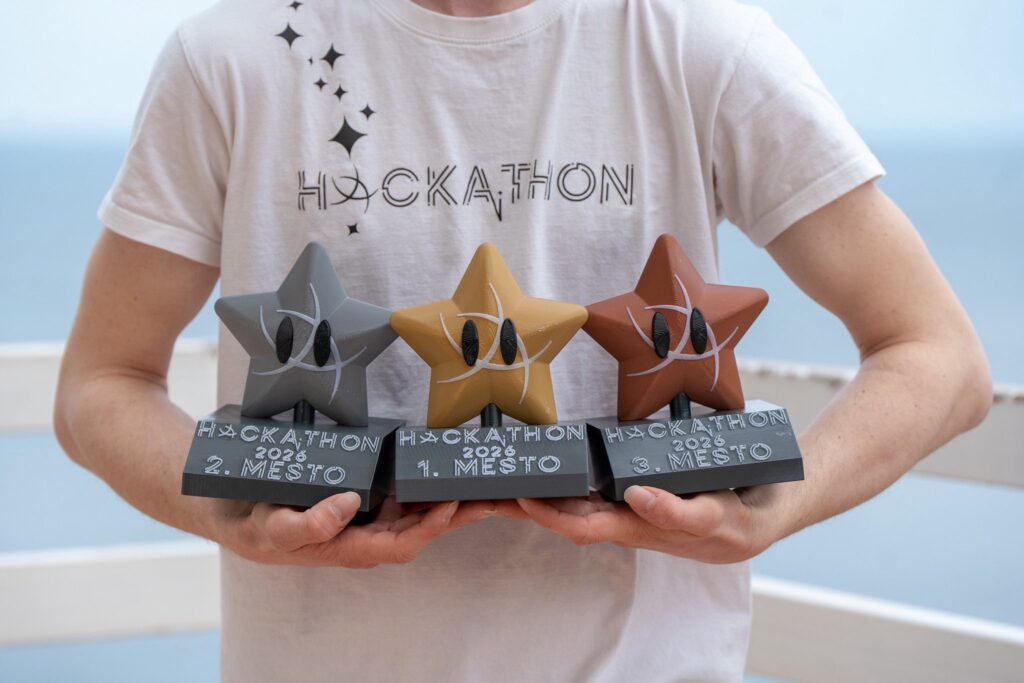
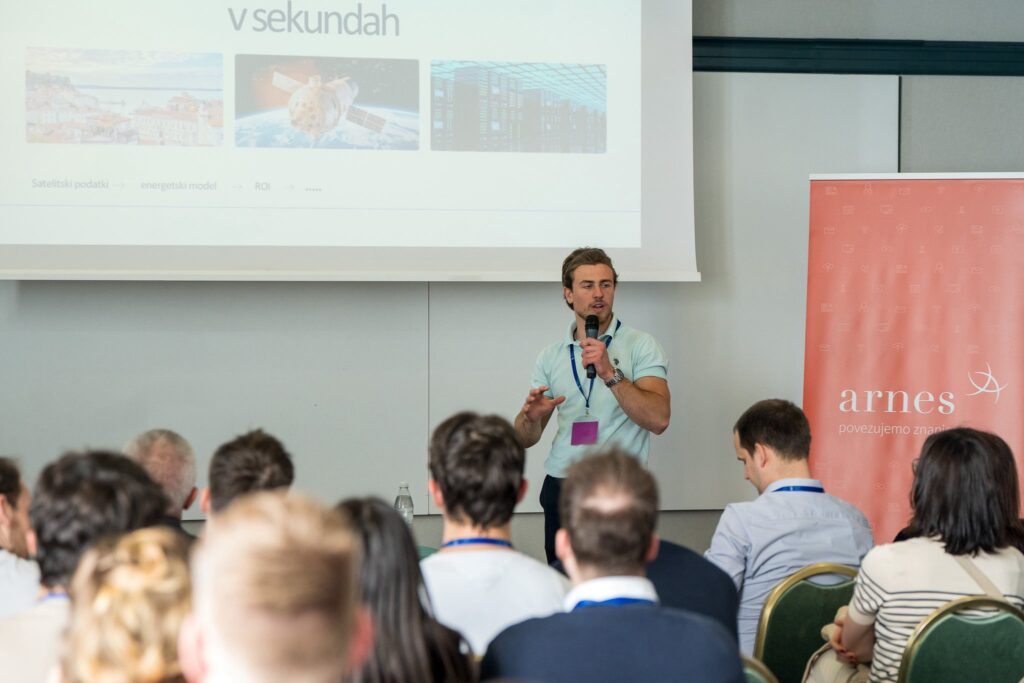
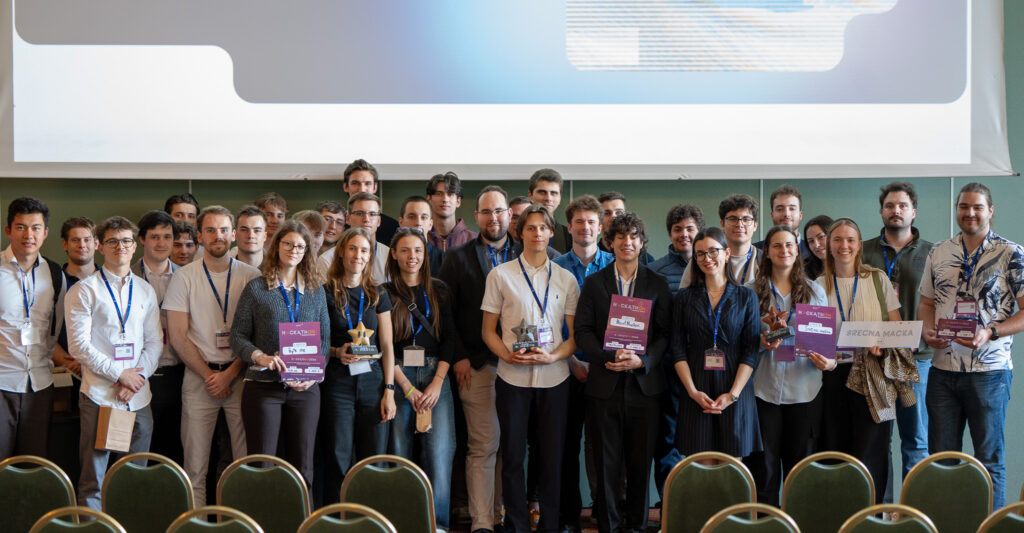
Photo: Arnes