
On Friday, 16 October 2026, partners of the Slovenian National Supercomputing Network (SLING) opened the doors of Slovenia’s supercomputing centres as part of the Open Days: Exascale Days event. More than 400 visitors had the opportunity to explore supercomputing infrastructure, learn about its capabilities, and discover how these technologies can be applied in scientific research, industrial innovation, and public administration.
The annual event, which has been held since 2021, aims to bring supercomputing closer to the general public and showcase technologies that enable the solution of complex computational problems, the processing of large volumes of data, and the development of advanced artificial intelligence models. The event brought together several Slovenian research and supercomputing centres, which organised presentations, lectures, workshops, and guided tours of their infrastructure.
The event is linked to Exascale Computing Day, celebrated on 18 October. The prefix exa represents 10 to the power of 18 (10¹⁸). In supercomputing, it is used to describe exascale performance, equivalent to 10¹⁸ floating-point operations per second (FLOPS). The development of such computing capabilities opens up new opportunities for scientific breakthroughs, advanced simulations, and artificial intelligence development.
The event took place at the following centres across Slovenia:
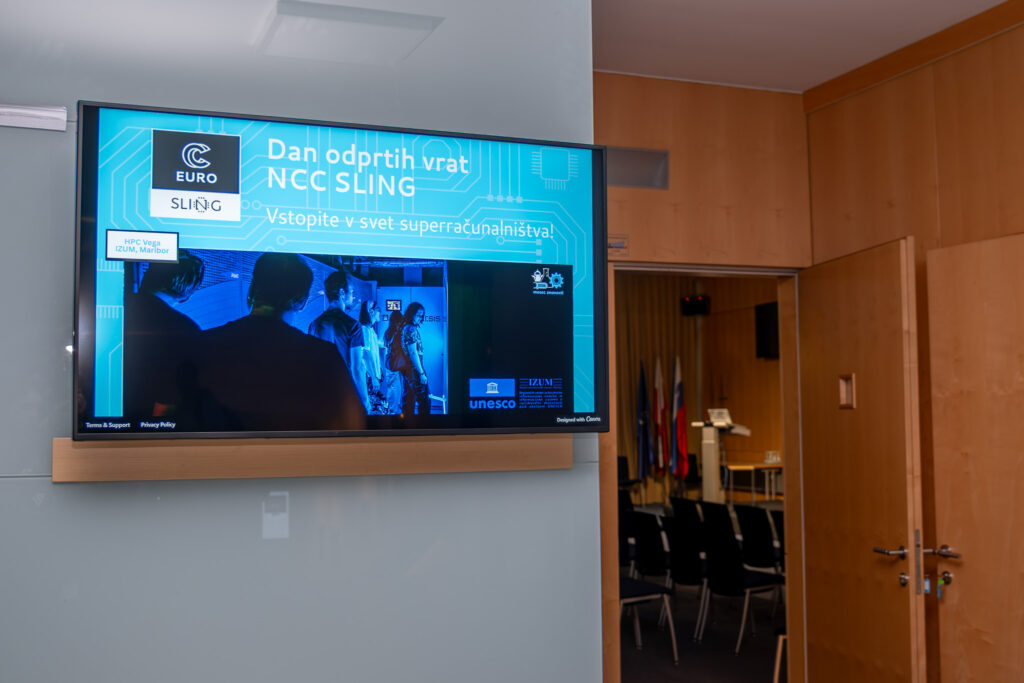
HPC Vega Supercomputer: A Tour of the IZUM Facilities
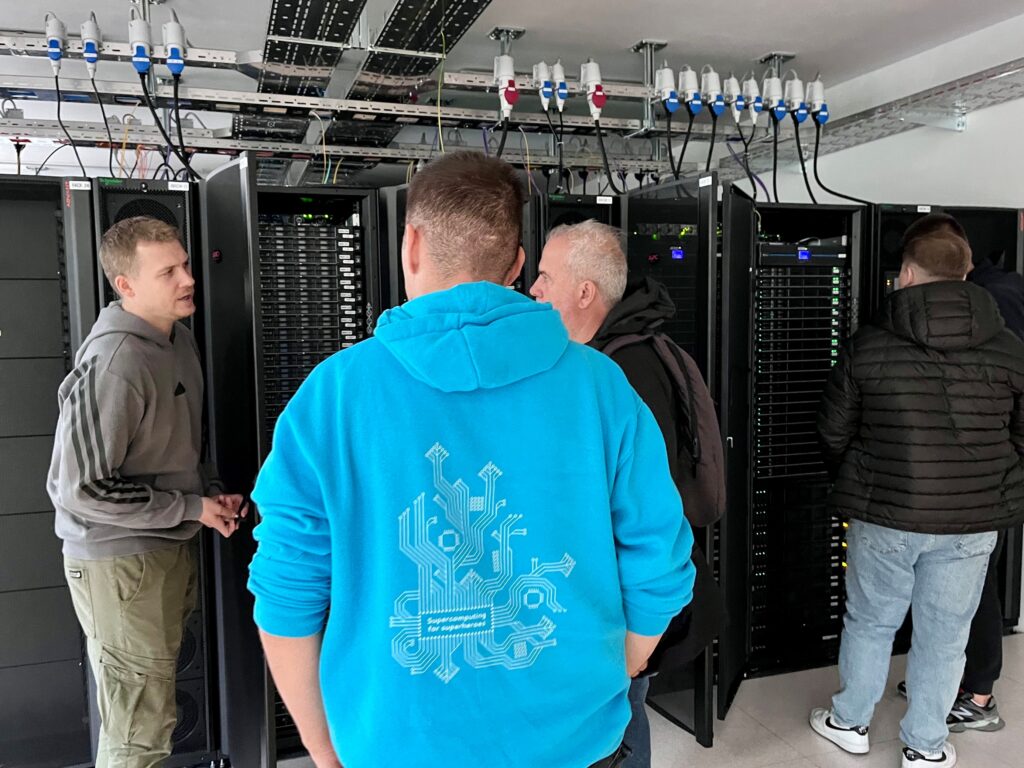
IZUM hosted several groups of participants during two morning sessions, during which they were first given a presentation on the specifications and tasks of the Vega supercomputer. They then toured the computing and systems room together, as well as the roof of IZUM, where the water-cooling system is located.
Ljubljana: A Tour of the Supercomputing Clusters on Teslova Street
On Teslova Street in Ljubljana, representatives of the Academic and Research Network of Slovenia (ARNES), the Faculty of Mechanical Engineering at the University of Ljubljana, and the Jožef Stefan Institute introduced participants to the fundamentals of supercomputing and artificial intelligence.
They also presented the Slovenian AI Factory (SLAIF) project. The visit concluded with a tour of the server room housing the Arnes and Jožef Stefan Institute computing clusters.
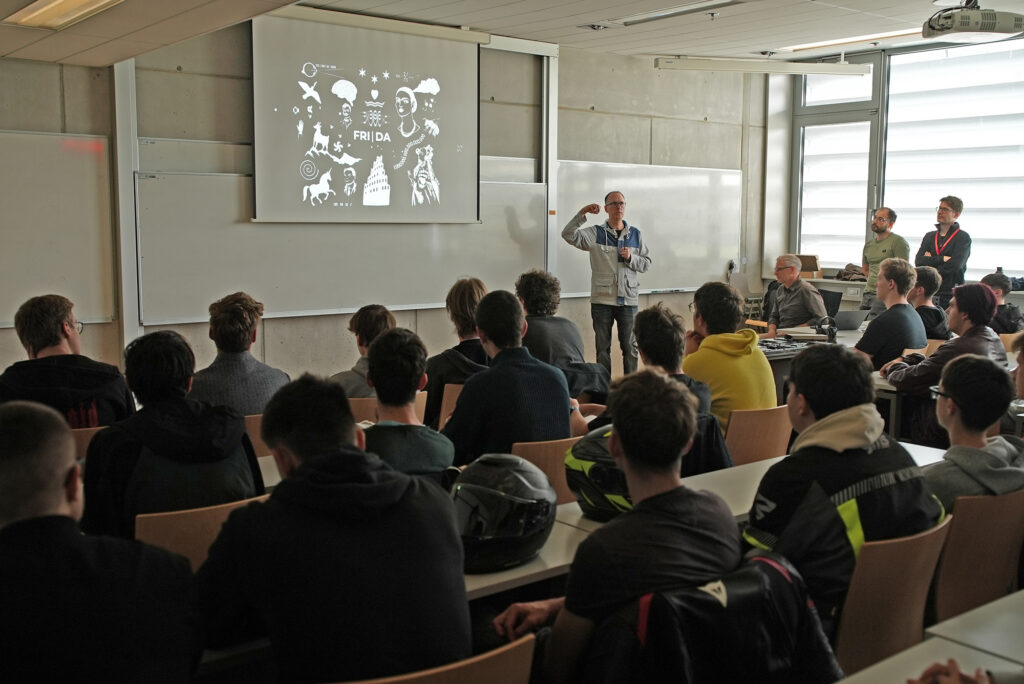
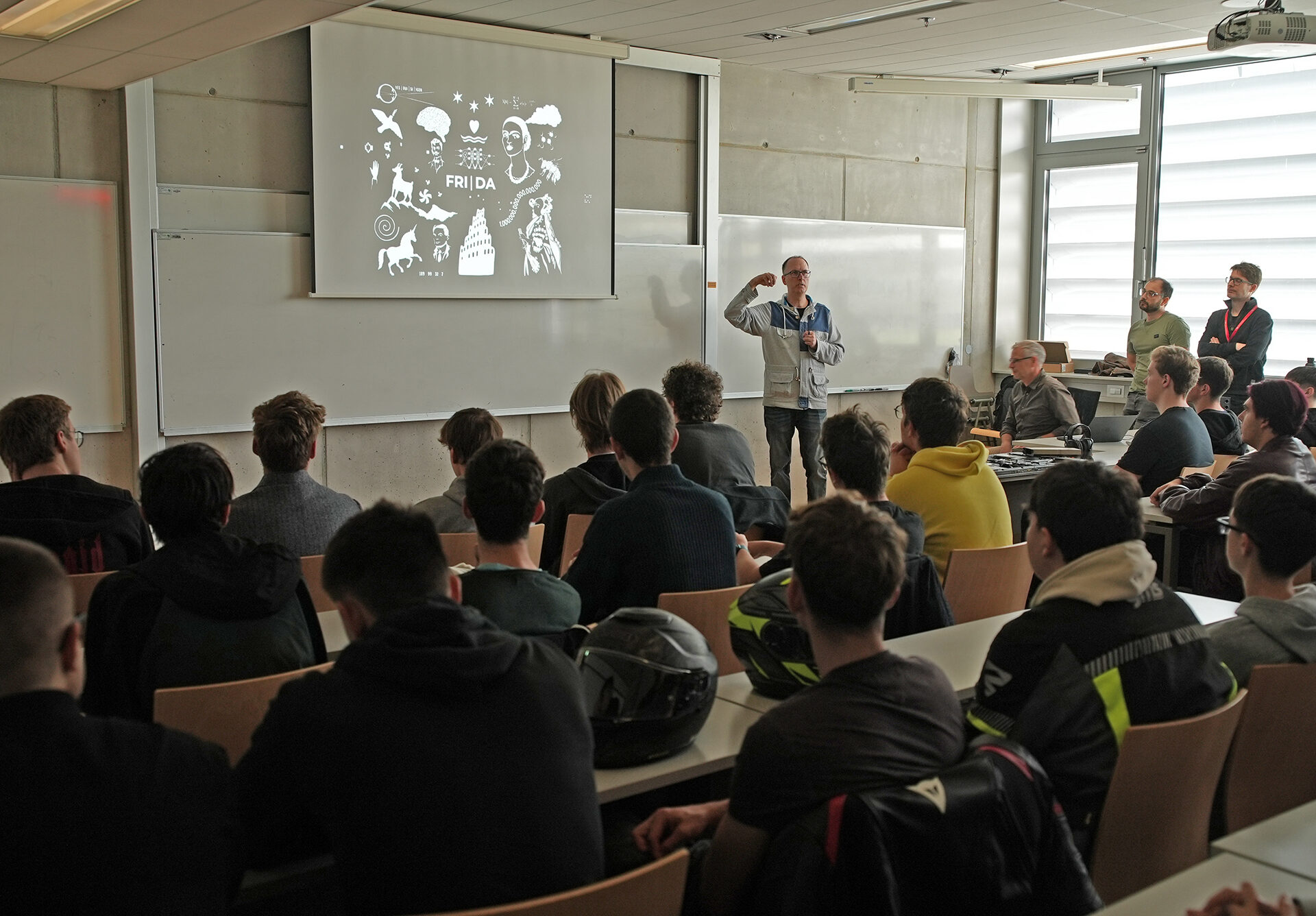
University of Ljubljana’s Faculty of Computer and Information Science: Secondary School Students Visit FRIDA
The Faculty of Computer and Information Science at the University of Ljubljana welcomed 150 secondary school students, who toured the FRIDA data centre located on the faculty’s roof and learned more about its computing power and the development of artificial intelligence models.
FRIDA features 104 graphics processing units (GPUs) specialised for artificial intelligence workloads and delivers computing performance of up to 708 petaflops. This computing capacity is particularly important for working with large language models. Among other projects, FRIDA is being used to train GaMS, a large language model for the Slovenian language.
Arctur: Students Explore the World of Supercomputing and Artificial Intelligence
Arctur, a company based in Nova Gorica, opened its doors to students, offering an engaging and interactive programme introducing them to the world of high-performance computing (HPC) and artificial intelligence.
Visitors toured the HPC infrastructure and completed practical challenges, experienced virtual reality, explored various interactive solutions developed by Arctur, and attended a lecture on the practical applications of HPC and artificial intelligence.
The event provided students with valuable insights into modern technologies, their real-world applications, and the opportunities they offer for the future.
The Trdina Supercomputer: Presentation of the Supercomputer and the SLAIF Project
The Faculty of Information Studies at the University of Novo Mesto hosted an open house for the Trdina supercomputer. Participants learned about high-performance computing, artificial intelligence, and their practical applications. They learned about the capabilities of the Trdina supercomputer, its potential applications, and the Slovenian Artificial Intelligence Factory (SLAIF) project. They also had the opportunity to test their knowledge in a quiz, and the event concluded with a guided tour of the supercomputer center.
Rudolfovo – Science and Technology Centre Novo mesto
As part of the SLING Open Day at the Faculty of Information Studies, Rudolfovo – Science and Technology Centre Novo mesto also organised a workshop entitled “HPC Trdina in Practice: From Supercomputer Architecture to Applications at Rudolfovo.”
Participants were introduced to the fundamentals of computer and supercomputer architecture, with a particular focus on HPC Trdina. Through examples of how the supercomputer is used at Rudolfovo, they learned how supercomputing infrastructure supports demanding computational tasks and gained insights into its operation and importance for scientific research.
National Institute of Chemistry: A Tour of the Ažman Computing Centre
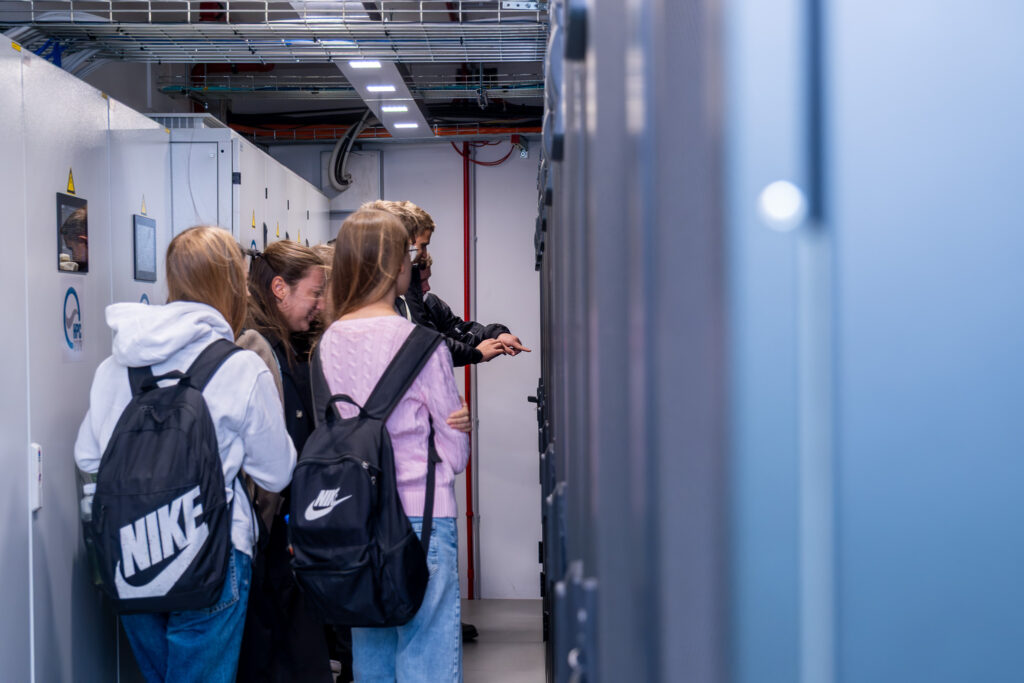
The National Institute of Chemistry opened the doors of its Ažman Computing Centre.
Before touring the supercomputer, students from Domžale Secondary School and CIRIUS Kamnik, as well as pupils from Dante Alighieri Primary School in Izola, attended a presentation on the development of supercomputing and examples of how supercomputers are used in research at the National Institute of Chemistry.
.
Supercomputing Up Close
This year’s Exascale Days once again provided an opportunity to explore Slovenia’s supercomputing capabilities and their practical applications firsthand.
Through presentations, lectures, hands-on workshops, and guided tours, visitors gained a better understanding of the infrastructure that supports modern scientific research and the development of new technological solutions.
By opening their doors to the public, Slovenian supercomputing centres are helping to raise awareness of high-performance computing and promote a better understanding of its role in advancing science, industry, and artificial intelligence.